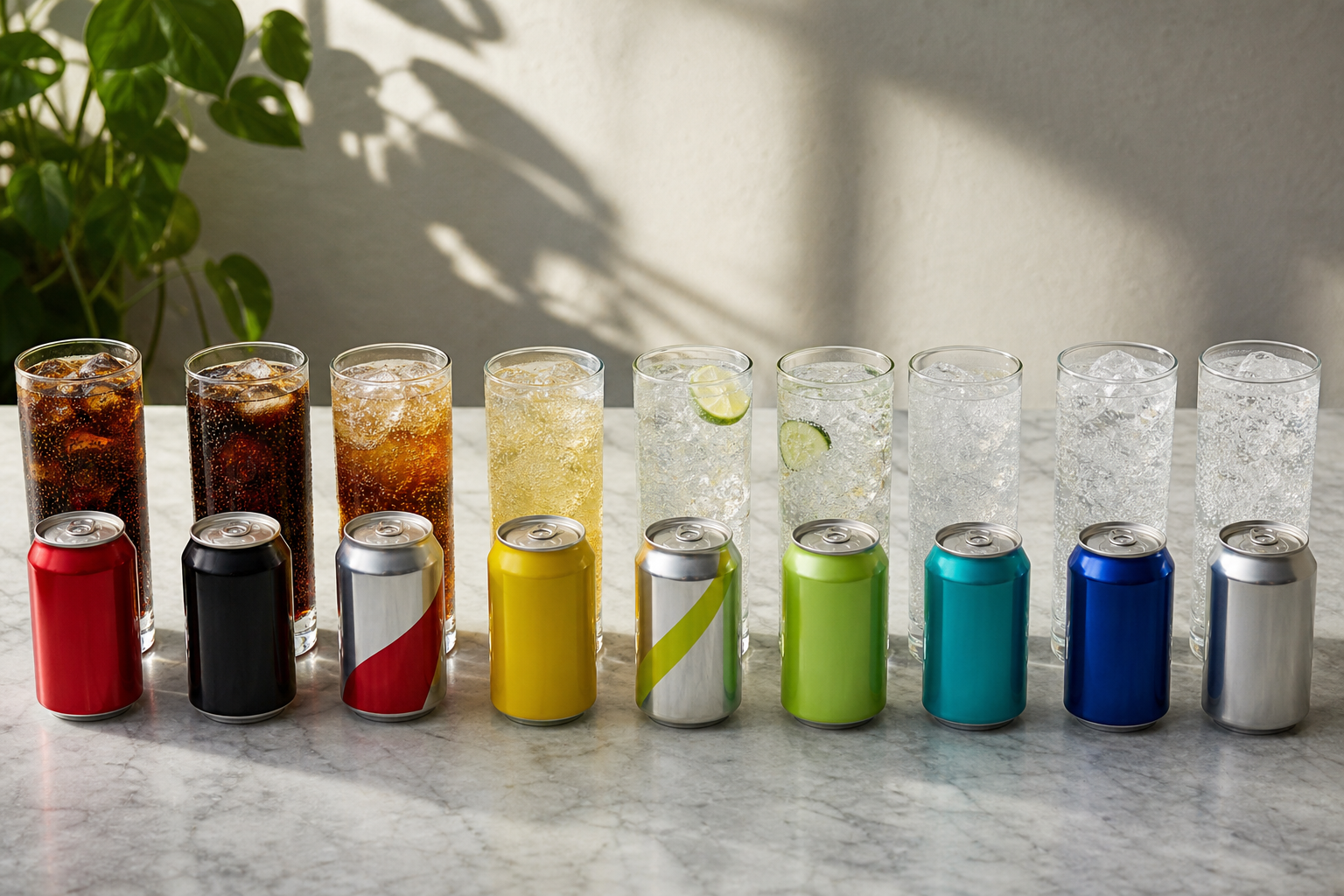
The shelf puts them side by side because they fizz. The panel splits them in two: drinks with 30 to 46 g of sugar per can, and drinks with none. Tonic water is the one most people put in the wrong group.
FDA’s reference amount for carbonated drinks is 12 fl oz, one can. The table uses that.
Per 12 fl oz can
Nine carbonated drinks, USDA reference values, per 12 fl oz
| Drink | kcal | Sugar | Share of added-sugar DV | Sodium | Caffeine |
|---|---|---|---|---|---|
| Orange soda | 179 | 45.8 g | 92% | 45 mg | 0 mg |
| Cola | 155 | 36.6 g | 73% | 11 mg | 33 mg |
| Root beer | 152 | 39.2 g | 78% | 48 mg | 0 mg |
| Lemon-lime soda | 151 | 38.2 g | 76% | 37 mg | 0 mg |
| Ginger ale | 124 | 32.6 g | 65% | 26 mg | 0 mg |
| Tonic water | 124 | 32.2 g | 64% | 44 mg | 0 mg |
| Diet cola | under 10 | 0 g | 0% | 28 mg | 43 mg |
| Club soda | 0 | 0 g | 0% | 75 mg | 0 mg |
| Sparkling mineral water | 0 | 0 g | 0% | 4 mg | 0 mg |
Share of Daily Value assumes all the sugar in a soda is added, which for these drinks it is. USDA lists diet cola at 1 to 2 kcal per 100 g; cans usually print 0, which FDA allows under 5 kcal.
What the table says
- Orange soda is the heaviest can. 179 kcal and 45.8 g of sugar. Cola is lower than root beer and lemon-lime on sugar, and the only one of the four with caffeine.
- Tonic water is a soft drink. 124 kcal and 32 g of sugar per can, level with ginger ale. The bitterness hides the sweetness, not the sugar.
- Diet cola has more caffeine than regular. 43 mg against 33 mg per can at USDA values.
- Club soda is not sodium-free. 75 mg per can, from added minerals. Sparkling mineral water carries 4 mg.
- Every sugared can is more than half the added-sugar Daily Value. 64 to 92%.
The bottle rule
Since FDA’s label update, a package that holds less than twice the reference amount is labeled as one serving. A 20 oz bottle is 1.7 times 12 oz. So its panel now shows the whole bottle: at USDA values for cola, about 258 kcal and 61 g of sugar. That is 122% of the added-sugar Daily Value in one bottle.
The 2 L bottle
BLS publishes an average price for all soft drinks, per 2 L, US city average. April 2025: $2.104. That is about $0.37 per 12 oz.
A 2 L bottle of cola, USDA values, BLS April 2025 price
| Measure | Value |
|---|---|
| kcal per bottle | 874 kcal |
| Sugar per bottle | 207 g |
| Price per bottle | $2.10 |
| kcal per dollar | 415 kcal |
207 g of sugar is a little more than four days of the 50 g added-sugar Daily Value in one bottle.
Over a year
One 12 oz can of cola a day is about 155 kcal. Across 365 days that is about 56,400 kcal and 13.4 kg of sugar at USDA values. That is an energy figure, not a prediction about your body. It is here so you can see the scale of a daily habit.
The Dietary Guidelines identify sugar-sweetened beverages as the largest single source of added sugars in US diets, and set the limit for added sugars at less than 10% of daily calories from age 2.
Same fizz, smaller number
Four swaps per 12 oz, USDA reference values
| You drink | Swap | kcal saved | Sugar saved | Trade-off |
|---|---|---|---|---|
| Cola | Diet cola | about 150 | 37 g | 10 mg more caffeine |
| Tonic water | Club soda with lime | 124 | 32 g | 31 mg more sodium |
| Orange soda | Sparkling water with 2 fl oz orange juice | about 150 | about 40 g | 5 g of sugar from the juice |
| Ginger ale | Sparkling mineral water | 124 | 33 g | No ginger flavor |
The juice swap keeps some sugar on purpose: 2 fl oz of orange juice is about 28 kcal at USDA values. None of it is added sugar.
The cons, can by can
- Orange soda. Most sugar per can here.
- Cola. 37 g of sugar and 33 mg of caffeine.
- Root beer. 39 g of sugar, 48 mg of sodium.
- Lemon-lime. 38 g of sugar.
- Ginger ale. 33 g of sugar. “Ginger” on the label does not change the panel.
- Tonic water. 32 g of sugar in a drink often treated as water.
- Diet cola. No sugar. Sweetened with non-nutritive sweeteners, named in the ingredients. 43 mg of caffeine.
- Club soda. 75 mg of sodium per can.
- Sparkling mineral water. Nothing to report on the panel. Flavored versions can add sweeteners; check the ingredients.
How to read a can or bottle
- Total sugar per container, not per serving, on anything under 24 oz.
- Added sugars against 50 g.
- Caffeine is not on the panel. If it matters, read the ingredient list and the maker’s statement.
- For sparkling water, read the ingredients: water and carbon dioxide, maybe natural flavor. Anything sweet is listed.
All figures are estimates from USDA reference values. Brands differ.
Related files
Energy drinks carry two to nine times a cola’s caffeine; see energy drinks by caffeine. The bag next to the soda follows a similar container rule, in the chip bag file. Iced coffee with flavored creamer can match a can of soda; the math is in the coffee creamer file.
All shelf comparisons are on the Grocery desk.