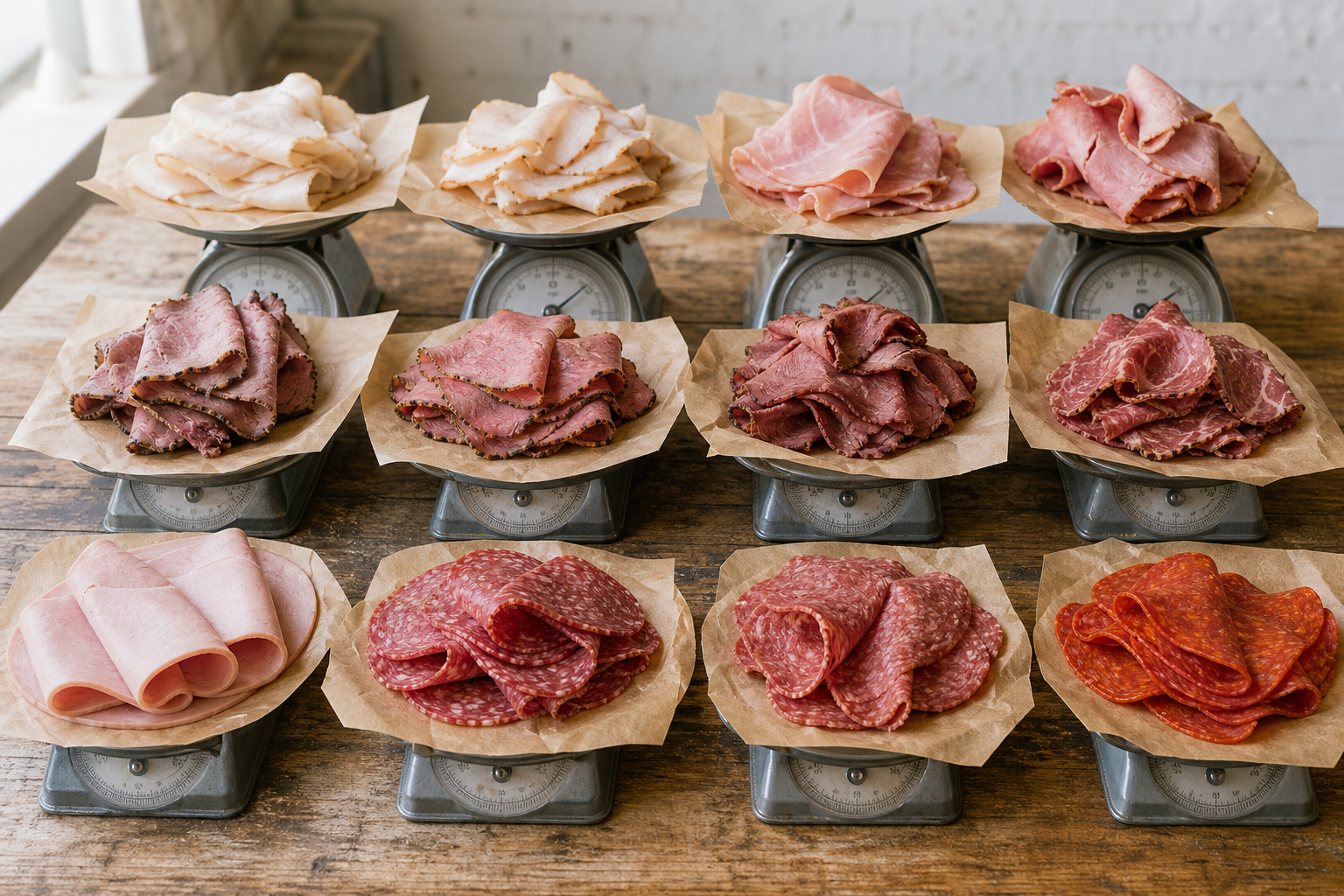
Sodium is the number deli meat is built on. Salt and curing solutions keep it safe, sliceable and moist. So the ranking that matters is milligrams per serving, and the per-calorie view shows which “lean” meats are carrying the most salt.
The serving here is 2 oz, 56 g, about three to four thin slices. The Daily Value for sodium is 2,300 mg.
The ranking, lowest sodium first
12 sliced meats, USDA reference values, per 2 oz
| Meat | Sodium | Share of DV | kcal | Protein | Sodium per gram of protein |
|---|---|---|---|---|---|
| Turkey breast, low-salt | 432 mg | 19% | 61 kcal | 12.2 g | 35 mg |
| Ham, regular, 11% fat | 456 mg | 20% | 92 kcal | 9.3 g | 49 mg |
| Roast beef, deli | 478 mg | 21% | 64 kcal | 10.4 g | 46 mg |
| Turkey breast, sliced | 503 mg | 22% | 59 kcal | 8.3 g | 61 mg |
| Ham, 96% fat-free, water added | 529 mg | 23% | 60 kcal | 9.4 g | 56 mg |
| Bologna, beef and pork | 538 mg | 23% | 172 kcal | 8.5 g | 63 mg |
| Chicken breast, deli, rotisserie-seasoned | 578 mg | 25% | 55 kcal | 9.7 g | 59 mg |
| Bologna, turkey | 600 mg | 26% | 117 kcal | 6.4 g | 94 mg |
| Pastrami | 604 mg | 26% | 82 kcal | 12.2 g | 49 mg |
| Turkey breast, smoked, 97% fat-free | 650 mg | 28% | 53 kcal | 11.7 g | 56 mg |
| Turkey, white, rotisserie-style, deli-cut | 672 mg | 29% | 63 kcal | 7.6 g | 89 mg |
| Salami, cooked, beef and pork | 974 mg | 42% | 188 kcal | 12.2 g | 80 mg |
All rows are USDA reference values for the category, not a single brand. Packages vary by brand and by deli counter.
What the table says
- Every row is above 400 mg. The lowest, low-salt turkey, is 19% of the Daily Value in 2 oz.
- “Low-salt” is not low sodium. FDA’s low-sodium line is 140 mg per serving. The low-salt turkey is three times that.
- Lean poultry is not the low-sodium choice. Smoked turkey, rotisserie-style turkey and rotisserie-seasoned chicken breast carry 578 to 672 mg, more than regular ham.
- Fat-free ham carries more sodium than regular ham. 529 against 456 mg. Water and salt replace fat.
- Salami is the outlier. 974 mg in 2 oz, and the most calories in the set.
- Per gram of protein, low-salt turkey leads. 35 mg of sodium per gram of protein. Turkey bologna is the worst at 94.
The cons, by package
- Turkey breast, low-salt. Still 432 mg. “Low salt” is USDA’s category name for this row. On a package, only “low sodium” carries the 140 mg meaning.
- Ham, regular. Least sodium after low-salt turkey, but 92 kcal and more fat per serving than the lean rows.
- Roast beef. 478 mg for 10.4 g of protein.
- Turkey breast, sliced. 8.3 g of protein in 2 oz, lower than the low-salt version.
- Ham, 96% fat-free. “Water added” on the label means the weight includes added water.
- Bologna, beef and pork. 172 kcal and 8.5 g of protein.
- Chicken breast, rotisserie-seasoned. 578 mg in a meat with 55 kcal.
- Bologna, turkey. Highest sodium per gram of protein.
- Pastrami. 604 mg. Brined and smoked.
- Turkey breast, smoked. 650 mg, the most of the lean turkeys.
- Turkey, rotisserie-style. 672 mg and 7.6 g of protein.
- Salami. 974 mg and 188 kcal.
One sandwich, totaled
At USDA reference values:
A turkey sandwich, sodium by layer
| Layer | Amount | Sodium |
|---|---|---|
| Turkey breast, sliced | 3 oz | 763 mg |
| White bread | 2 slices, 50 g | 245 mg |
| American cheese | 1 slice, 21 g | 351 mg |
| Yellow mustard | 1 tsp | about 55 mg |
| Total | about 1,415 mg |
That is about 62% of the 2,300 mg Daily Value in one sandwich. The turkey is just over half of it. Swap in low-salt turkey and the total drops by about 110 mg. Swap the American cheese for Swiss and it drops by about 300 mg.
What the sodium claims require
Sodium claims for single foods, per reference amount
| Claim | Requirement |
|---|---|
| Sodium free | Less than 5 mg per serving |
| Very low sodium | 35 mg or less per serving |
| Low sodium | 140 mg or less per serving |
| Reduced or less sodium | At least 25% less than the regular product |
| Light in sodium | At least 50% less than the regular product |
Meat and poultry labels are overseen by USDA’s Food Safety and Inspection Service, which applies parallel sodium-claim definitions. A reduced-sodium salami at 25% less than 974 mg is still about 730 mg per 2 oz.
How to read the package
- Sodium per serving. Then check the serving: 2 oz is common, 1 oz appears on some packages.
- Divide sodium by protein. Under 50 mg per gram is the better half of this aisle.
- If the label says reduced, find the regular version and compare.
- Count every layer of the sandwich, not just the meat.
All figures are estimates from USDA reference values. Deli counters do not label every product the way packages do.
Related files
The bread under the meat adds about 120 mg a slice; see bread per slice. Cheese is the other big sodium layer, ranked in cheese per 30 g. A whole rotisserie bird is often cheaper per 100 g than sliced turkey, and its sodium is in the rotisserie chicken math.
All shelf comparisons are on the Grocery desk.