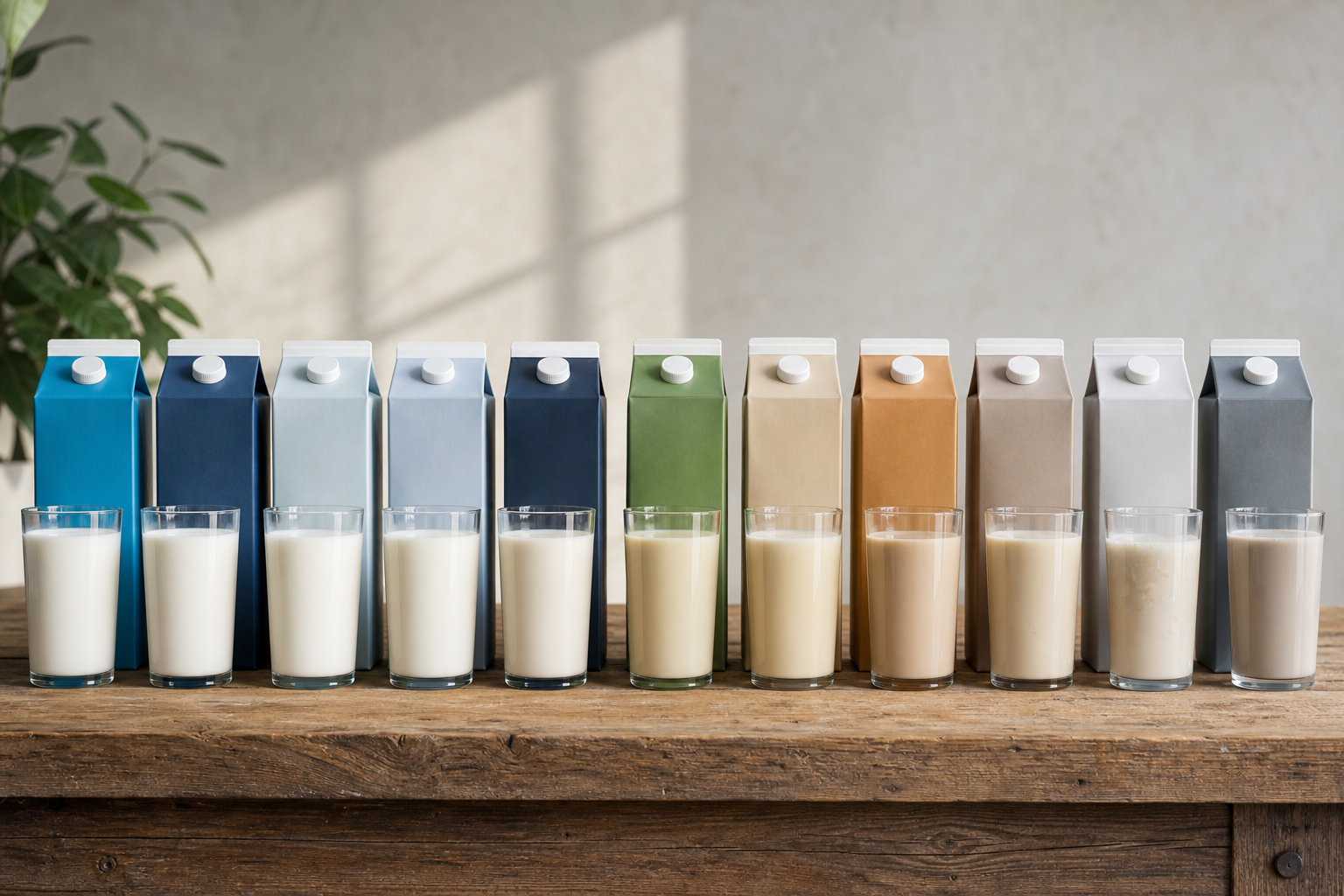
The carton says milk. The protein line says which kind. FDA’s reference amount for milk and milk-substitute beverages is the same, 240 mL, one cup. So the panels compare cleanly. The protein in them does not.
The ranking
11 milks per cup, ranked by grams of protein per 100 kcal
| Milk | kcal | Protein | Protein, g per 100 kcal | Sugar | Calcium |
|---|---|---|---|---|---|
| Dairy, skim | 80 | 8.3 g | 9.9 | 12.5 g | 299 mg |
| Soy, unsweetened | 80 | 7.0 g | 8.7 | 1.0 g | 299 mg |
| Dairy, 2% | 120 | 8.1 g | 6.6 | 12.3 g | 293 mg |
| Soy, original, fortified | 100 | 6.3 g | 6.0 | 8.9 g | 299 mg |
| Dairy, whole | 150 | 7.7 g | 5.2 | 12.3 g | 276 mg |
| Almond, unsweetened | 35 | 1.0 g | 2.7 | 1.9 g | 442 mg |
| Oat, Oatly Original | 120 | 3.0 g | 2.5 | 7.0 g | not in record |
| Oat, Planet Oat Original | 100 | 2.0 g | 2.0 | 4.0 g | not in record |
| Almond, vanilla, sweetened | 90 | 1.0 g | 1.1 | 15.0 g | 451 mg |
| Coconut beverage, sweetened | 70 | 0.5 g | 0.7 | 6.0 g | 451 mg |
| Rice, unsweetened | 110 | 0.7 g | 0.6 | 12.7 g | 283 mg |
Dairy, soy, almond, rice and coconut rows are USDA reference values. The oat rows are label data filed with USDA’s Branded Foods database in 2023. Calories are rounded the way a label rounds; the ratio uses unrounded values.
What the table says
- Only soy keeps pace with dairy. Unsweetened soy carries 7.0 g a cup against 8.3 g for skim. Every other plant milk here carries 3 g or less.
- Oat milk is a carbohydrate drink with some protein. 120 kcal and 3 g of protein for Oatly Original, about the calories of 2% dairy with 37% of its protein.
- Unsweetened almond is the lowest-calorie carton. 35 kcal a cup. Most of what you drink is water.
- Sweetening moves almond from 35 to 90 kcal. The vanilla sweetened carton adds 15 g of sugar.
- Dairy’s sugar is lactose. 12.3 to 12.5 g a cup in every dairy row, none of it added.
- Rice milk’s sugar is not lactose. 12.7 g a cup, unsweetened on the carton, from the rice starch broken down in processing.
The oat sugar line
Oat milk is made by treating oat starch with enzymes, which turns part of it into sugar. Oatly’s filed label lists Total Sugars at 7 g a cup and Includes Added Sugars at 7 g. Planet Oat lists 4 g, about 3 g of it added. If a cereal box is your benchmark, 7 g of added sugar is close to the total sugar in a 40 g serving of Honey Bunches of Oats, 7.9 g.
Three cups a day, totaled
The gaps grow with the pour. At three cups a day, across coffee, cereal and a glass:
Three cups a day, by carton
| Milk | kcal | Protein | Added sugars |
|---|---|---|---|
| Dairy, skim | 250 | 25 g | 0 g |
| Soy, unsweetened | 240 | 21 g | 0 g |
| Oat, Oatly Original | 360 | 9 g | 21 g |
| Almond, unsweetened | 110 | 3 g | 0 g |
The oat row uses 42% of the 50 g added-sugar Daily Value before any food.
The cons, carton by carton
- Dairy, skim. 12.5 g of sugar, all lactose. Not for anyone avoiding lactose.
- Soy, unsweetened. 1.0 g of sugar. If you want it sweet, you add it yourself, and the number with it.
- Dairy, 2% and whole. 120 and 150 kcal for the same protein as skim.
- Soy, original. 8.9 g of sugar a cup, part of it added.
- Almond, unsweetened. 1 g of protein.
- Oat, Oatly Original. 7 g of added sugar on the label, 3 g of protein.
- Oat, Planet Oat Original. 2 g of protein.
- Almond, vanilla sweetened. 15 g of sugar and 1 g of protein.
- Coconut beverage. Lowest protein of the plant milks after rice. Fat is mostly saturated.
- Rice, unsweetened. 113 kcal and 0.7 g of protein: the lowest ratio here.
What FDA asks cartons to say
FDA’s 2023 draft guidance accepts names like soy milk and oat milk. It recommends that cartons with a “milk” name carry a voluntary statement when the nutrients differ from dairy milk, such as “contains lower amounts of vitamin D and calcium than milk.” Protein is one of the nutrients the guidance compares. A carton without the statement is not breaking a rule; the draft is a recommendation.
Per dollar, dairy only
BLS publishes an average price for whole milk, US city average, per gallon. March 2025: $4.050. That is $0.25 a cup, or about 3.3 cents per gram of protein. BLS does not publish a plant-milk average, so there is no matching federal number for the other rows. Check the shelf tag and divide by 8 cups per half gallon.
How to read a carton
- Protein per cup. Over 6 g: dairy or soy. Under 3 g: everything else.
- Added sugars. Unsweetened soy and almond read 0 g. Oat may not.
- Calcium and vitamin D. Plant milks are fortified to different levels; the carton gives the milligrams.
- Shake it. Fortified calcium settles.
All figures are estimates from USDA reference values and filed label data. Cartons change.
Related files
If your milk goes on cereal, the sugar in the box matters as much as the carton; see cereal ranked by sugar. For a protein-dense dairy option by the spoon, the yogurt ranking goes up to 17 g per 100 kcal. In coffee, the splash is the issue, covered in the coffee creamer file.
All shelf comparisons are on the Grocery desk.